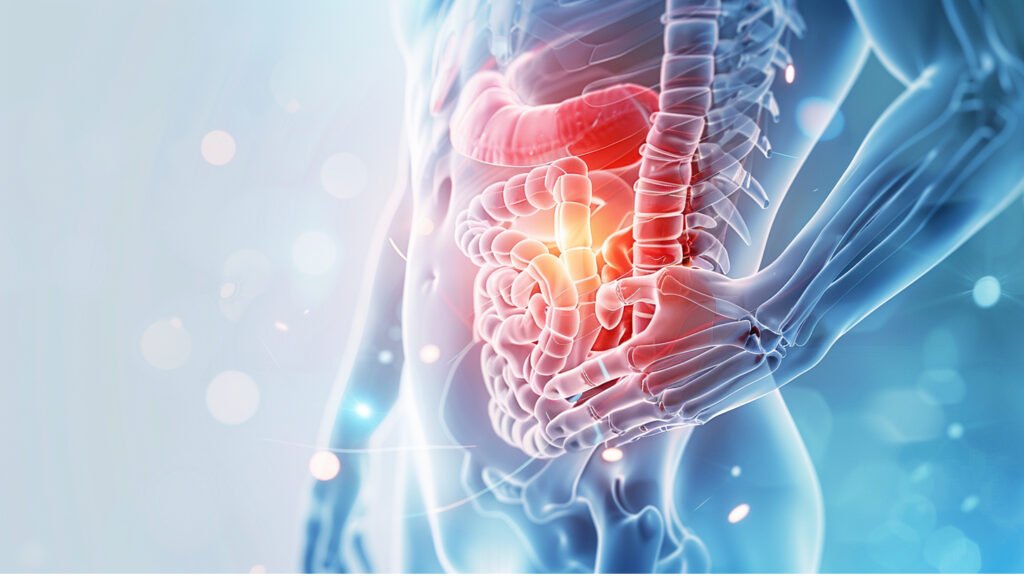
What is hernia pain like?
By Dr. Arevalo on December 15, 2025
Read more

Hernias, if not treated in time, can lead to serious complications. More than a million hernia repairs are performed each year in the United States, most of them using mesh. Now more centers offer natural not permanent mesh options, including Dr. Arevalo, who provides his patients this alternative that can mean several benefits.

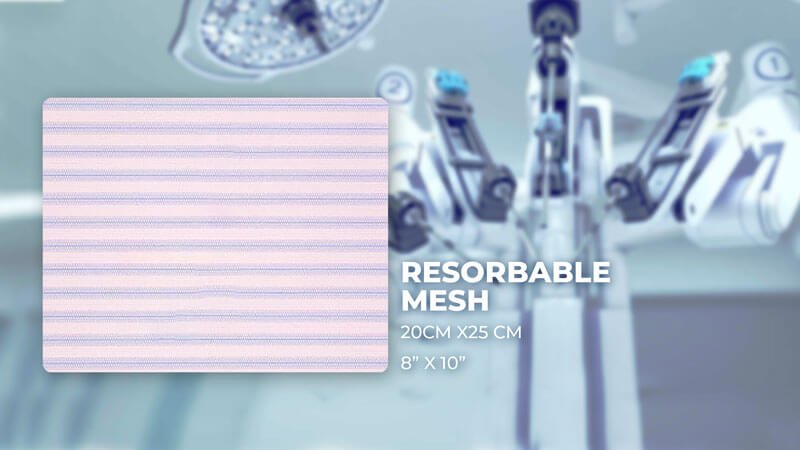
Hernia mesh is a medical device that provides support to damaged tissue around hernias, by using mesh the chance of another hernia is lower. Options include permanent and absorbable mesh. Absorbable mesh is made from natural material and works as a scaffold with your body to rebuild tissue. As you heal, the mesh dissolves, leaving good and healthy strong tissue behind with no foreign material.
Even though mesh hernia repair is the medical standard, sometimes it is not always recommended and the use of mesh depends on each case. In fact, non mesh hernia repair is an alternative that has become popular in recent years by closing the hernia defect only with sutures.
One of the problems is that hernia recurrence rate increases if mesh is not used. In patients, that mesh is necessarily needed, a dissolvable mesh that offers all the benefits of mesh is recommended. This mesh alternative can potentially benefit patients with high risk factors for post operative complications and it can also be used in childbearing age patients with medium size hernias avoiding a permanent material that could impact future pregnancies.
Dr. Arevalo has extensive experience in alternatives to permanent mesh hernia repair in Texas and offers his patients the best technology available.
This will depend on the complexity of your procedure and the hernia repair technique that was utilized, either open repair, laparoscopic repair, or robotic repair. Robotic surgery is preferred for must hernias as it is much kinder to the body and there will be less pain and a faster recovery; for small defects open surgery with no mesh is possible with excellent outcomes.
Hernia repair recovery time may vary according to each case. You are encouraged to walk and climb stairs after surgery. If absorbable mesh was used during your repair, it will not affect the post-operative recommendations.
With today's technology, there are more options for your hernia repair. Absorbable mesh, has proven to be a reliable choice for hernia repair with clinically proven benefits.
Dr. Arevalo is performing no mesh or absorbable mesh hernia repair in Houston. If you still have any questions or want to know what type of repair is the most suitable for you, you can ask Dr. Arevalo through its website or by calling the number 281-351-5409.
It is a scaffold or frame that allows for tissue integration and generation, providing support to the weakened and damaged tissue. The scaffold will dissolve, leaving the good healthy tissue behind.
Absorbable mesh duration varies from 2 months to 36 months. Depending on your hernia characteristics, your hernia expert surgeon will advise you on which fits better to your needs. We use the most biocompatible mesh available, and this has a full resorption of 18 months.
Is made from natural materials and as you heal, the mesh gradually transforms into water and carbon dioxide co2, which is what we exhale. Bioabsorbale mesh has very good clinical outcomes when used properly.
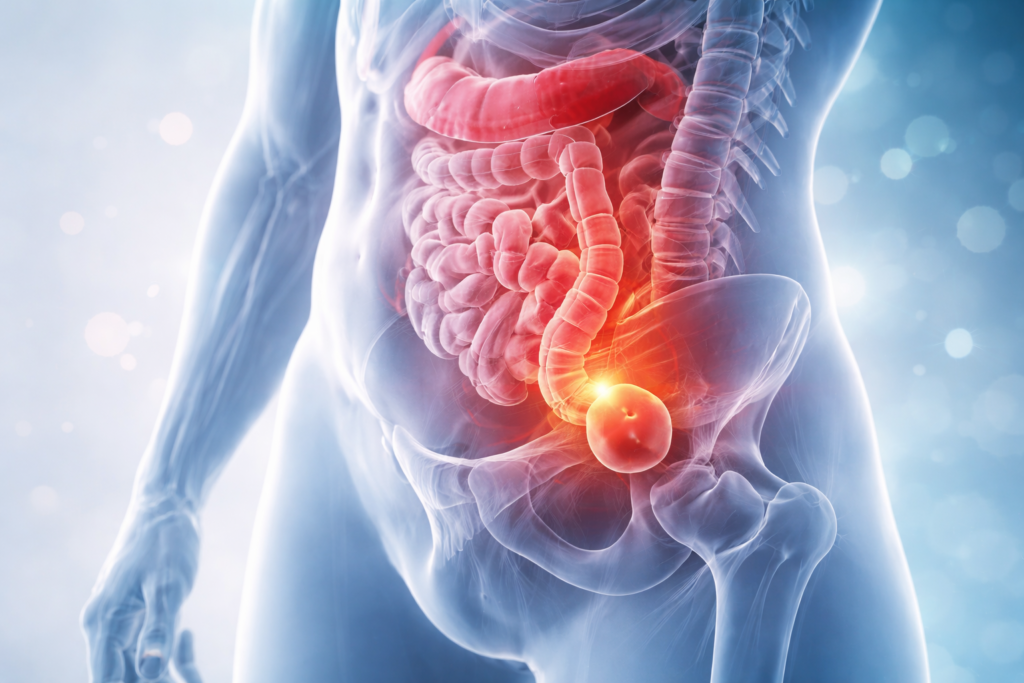
Nowadays, it is important to understand what is a hernia and why it appears because now it is more common. A Hernia can happen when fat, tissue, or part of an organ pushes through a weak spot or hole in the abdominal muscle. Depending on the type of hernia you have and how severe it is, the condition can range from slightly bothersome to life-threatening, according to Hopkins Medicine.
In adults, hernia are very common, in the groin or abdomen. When a patient has a hernia, they may notice or feel a bulge in the area of pain. Also, they can experience pain during certain activities such as: Lifting or standing up for a very long period of time.
A hernia can appear for different reasons, These causes can be the following:
These are usually the most common causes for which a hernia develops, but there can be many more, and it also depends on the type of hernia.
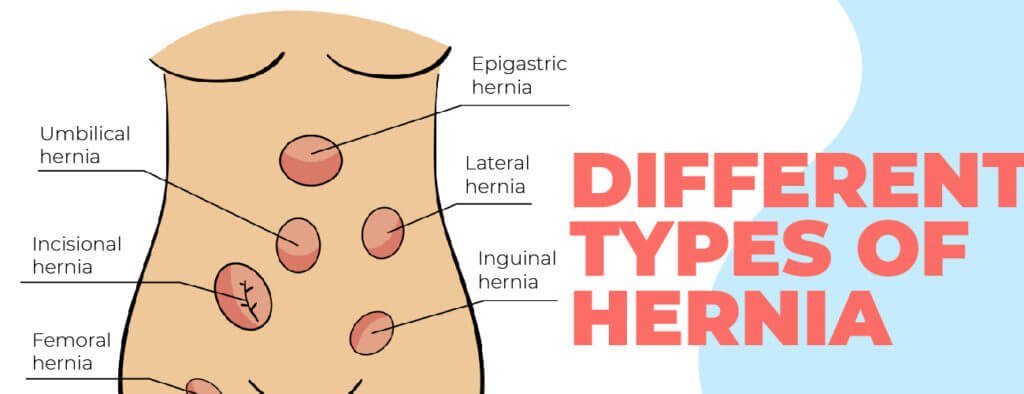
There are two types of hernias, internal and external. The most common type of hernias are external, which means that the tissue is pushing through the abdominal wall toward the outside of the body. This often creates a bulge that you can feel or see, and an internal hernia refers to a hernia that happens inside the abdominal cavity. Internal hernia most commonly involve the intestinal bowel loops and cannot be visualized externally.
The most common types of hernias are the followings:
An inguinal hernia occurs when the intestines or fat from the abdomen bulge through the lower abdominal wall into the inguinal, or groin, area.
Femoral hernias sometimes appear as a painful lump in the inner upper part of the thigh or groin. The lump can often be pushed back in or disappears when you lie down. Coughing or straining may make the lump appear.
An umbilical hernia occurs when a tissue bulges out through an umbilical hernia occurs when a tissue bulges out through an opening in the muscles of the abdomen near the navel or belly button (umbilicus). About 10% of abdominal hernias are umbilical hernias.
A bulge in the belly button or surrounding region (often most visible when coughing or straining)
Pain at the hernia site
Constipation
Sharp abdominal pain and vomiting can mean the hernia is strangulated.
An incisional hernia is very common in infants and young children, particularly it may happen in babies born prematurely. An umbilical hernia appears as a painless lump in or near the navel, better known as the belly button.
An epigastric hernia can occur when the tissues in the upper abdominal wall don’t close completely during development. Research continues to look for the specific causes of this type of hernia. Not as much is known about epigastric hernias, possibly because they aren’t reported many times due to a lack of symptoms.
A hiatal hernia is when your stomach bulges up into your chest through an opening in your diaphragm, the muscle that separates the two areas. The opening is called the hiatus, so this condition is also called a hiatus hernia.

It is important to determine when you should consult your trusted doctor to prevent any type of these hernias becoming a danger to the patient. You should visit the doctor when you have these symptoms, (also everything depends on the type of hernia you have).
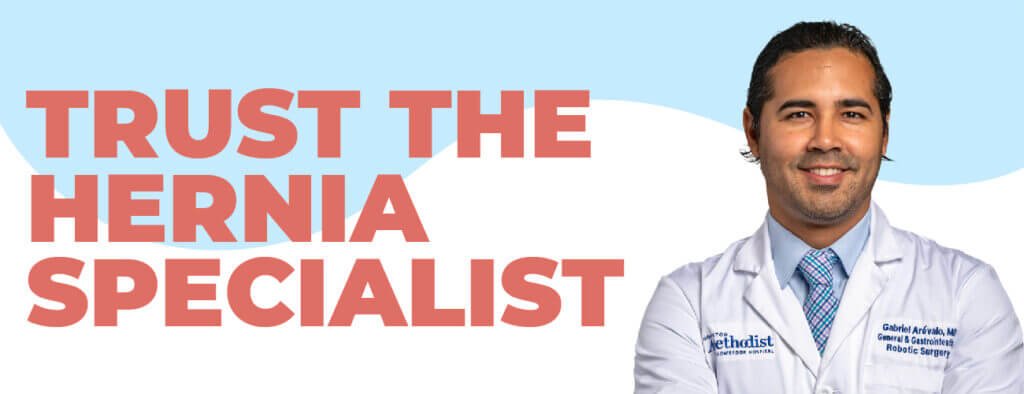
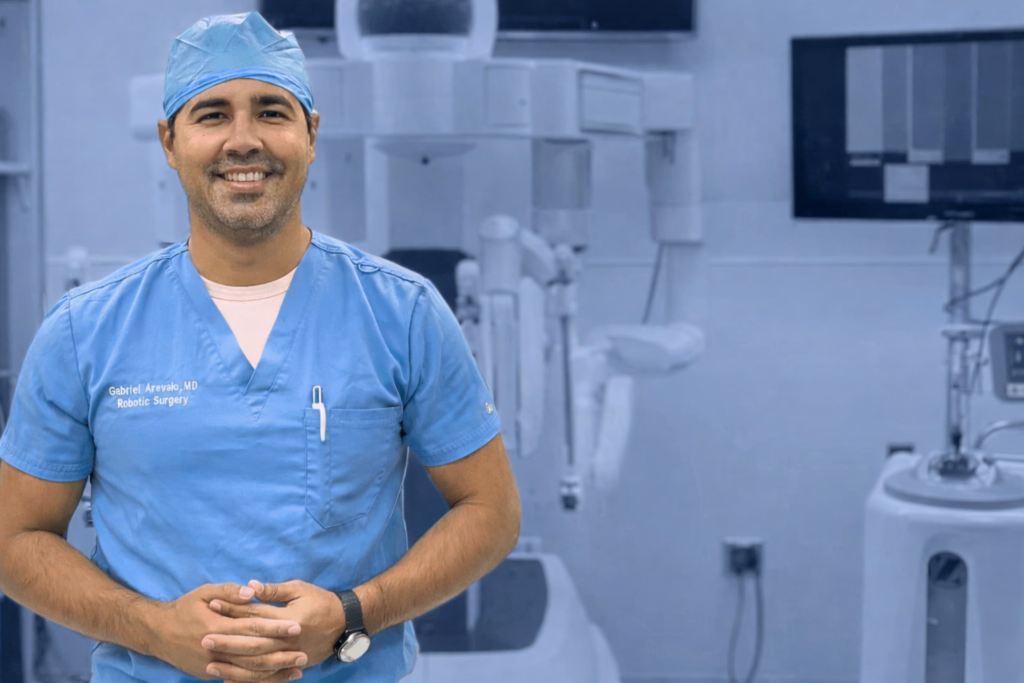
It is extremely important to visit a trusted Doctor, like Dr. Gabriel Arévalo, who has several years of experience in hernias and surgery. He is currently chief of the surgery department at Houston Methodist, Willowbrook.
Dr. Gabriel Arévalo is a fellowship-certified Robotic and Laparo-endoscopic surgeon specializing in complex hernia repairs and advanced gastrointestinal surgery. He currently holds a national leadership role as a member of the HERNIA TASK FORCE of the Society of American Gastrointestinal Endoscopic Surgeons.
Also, Dr. Arévalo focuses on gastroesophageal reflux disease, gallbladder disease, and diaphragm dysfunction. He also does endoscopic treatments for achalasia and Gastroparesis.
In addition to operating, he has distinguished himself by his valuable contributions in research for improvements in hernia repair, gastroesophageal reflux disease, robotic surgery, and endoscopy. He has authored several publications and invited commentaries to some of the most influential gastrointestinal journals in the world.
During pregnancy, the most common hernia that occurs is the umbilical hernia, which can pose a risk to your pregnancy.
It occurs mainly during the second half of pregnancy and is due to the increased abdominal girth, uterus enlargement, and the thinning of your abdominal wall muscles. But, it can also happen after pregnancy due to great abdominal strain when giving birth.

An umbilical hernia is a type of hernia that is located at the belly button. Umbilical hernias are more often acquired due to an increased intraabdominal pressure that causes a tear or hole in the abdominal wall at the belly button.
The hernia has a sac that can contain part of the intestine, fat, or fluid. These tissues can stick out through an opening or a weak spot in the abdominal wall.
Umbilical hernias have been detected in up to 90% of pregnant women.
Generally speaking, this hernia should be repaired after the delivery. But, if the umbilical hernias are causing too much pain or become incarcerated with intestine or fat, it will require individualized treatment.
Factors to consider are no mesh surgery vs. mesh surgery. However, the latter can cause increased pain in future pregnancies and the risk of pregnancy loss related to surgery during pregnancy, the timing for surgery, gestational age (first second, or third trimester) type of surgical approach open or robotic and available resources including fetal monitoring are all very important.
You can make an appointment with Dr. Arevalo to find out the best treatment for you, both during and after pregnancy.
An umbilical hernia is a type of hernia that is located at the belly button. Umbilical hernias in adults are more often acquired due to an increased intraabdominal pressure that causes a tear or hole in the abdominal wall at the belly button.
The hernia has a sac that can contain part of the intestine, fat, or fluid. These tissues can stick out through an opening or a weak spot in the abdominal wall.
Umbilical hernias are more common in women who have been pregnant more than one time, in people who are overweight, in people who do a lot of physical activity, and in people who have had an abdominal operation.
They are characterized by a bulge around the belly button that can become enlarged when laughing or coughing. They are usually painless in babies and children, however, in adults who develop it the most common symptoms are pain, pressure and some gastrointestinal discomfort.
Repairing the hernia can relieve pain and discomfort and even make the bulge go away. It is important to remember that the hernia will not go away on its own. It’s bets that you have surgery if:
With time and the persistent intraabdominal pressure, the hole between the muscles can enlarge, making a risk for the intestines to get incarcerated, “trapped” or even strangulated resulting in serious complications requiring emergency surgery.
Umbilical hernias can be repaired simply without the need for mesh if they are small. For wide umbilical hernias, robotic hernia surgery offers less pain and faster recovery.
The tissue that enters the hernia sac is pushed back into the abdomen. The muscles and tissues around the navel are repaired, and the cut is closed with stitches. This can be accomplished through a small incision at your bellybutton or far away from it when performing robotic hernia repair.
If the surgeon considers it, a mesh can be placed in the weak to buttress the area before closing to prevent the hernia from recurring.
Dr. Arevalo is one of the best surgeons in Houston, Texas that can repair different types of hernias by using robotic hernia surgery, offering faster recovery and less pain. You can schedule an appointment to learn what is the best treatment for you.
Watch Dr. Arevalo's video to learn more about the types and causes of an umbilical hernia:
One in five people will have a hernia in their lifetime, and the only treatment is surgery. Today, this intervention can be done with minimally invasive techniques. Benefits? Less hospital stay and faster recovery. Most patients tend to have many questions before and after surgery, and in this blog, I will be answering my top 8 questions asked for hernia surgeries.
Hernia repair can be done through two options: open surgery or minimally invasive surgery (laparoscopic, robotic, or hybrid). Open surgery involves making a larger incision to access the hernia and can take about 3 hours, while minimally invasive surgery involves making a smaller incision, and it only takes about 1 hour. The right surgery will depend on the size of your hernia, where the abdominal wall is, whether this is the first time it is getting repaired, and what your general health is like. Dr. Arevalo is a fellowship certified hernia expert and will determine which approach fits best for you.
After hernia surgery, you are likely to feel a little uncomfortable for a few days. But you should feel better after a few days. Dr. Arevalos' patients return to work quite fast due to the benefits of robotic surgery.
Most people who have open hernia repair surgery for large hernias can go home in one or 2 days after surgery. For minimally invasive surgery, patients can go home the same day or next depending on the complexity of the surgery. Recovery time is approximately 2 weeks but starts on day one by walking and moving out of bed. You will most likely be able to resume light activities soon after surgery . But, there are still activity restrictions, such as lifting no more than 20 pounds for the first 2 weeks.
Dr. Arevalos patients follow an enhanced recovery pathway after surgery, this means patients are encouraged to get out of bed and walk the same day of surgery among other instructions.
As long as there are no contrary guidelines, it will be advisable to get up 2 to 3 times to walk a little. To do this, there must be always a person next to you who helps you turn on your side. Then you should bend your knees so that they hang over the side of the bed, and with the help of your arms, lift your upper body.
Constipation can be very common after hernia surgery, which is why I will give you 5 tips to help you have a bowel movement.
Yes. After surgery, the bulge should be gone. What you can see is fluid accumulation or inflammation and swelling, giving the sense of a bulge.
Be sure to call your surgeon if you develop any of the following symptoms:
Make sure to call your doctor for any other questions you may have. If you haven’t gone through surgery yet, but you are thinking about it, you can always make an appointment with Dr. Arevalo and feel free to ask as many questions you like.